Trained in Tunnels: How Specialty Isolation Leaves Critical Gaps in Whole-Patient Care
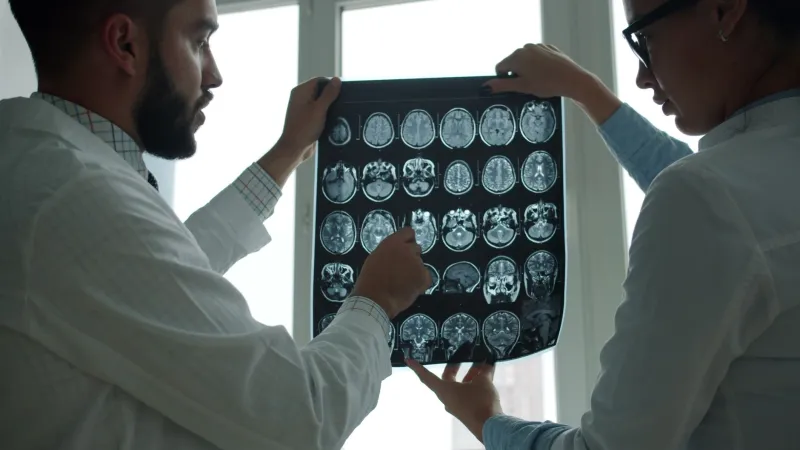
The modern American medical system is, in many respects, a triumph of specialization. Subspecialists command deep reservoirs of knowledge that would have been unimaginable to the generalist physicians of a century ago. A cardiologist interpreting a complex arrhythmia, a hepatologist navigating end-stage liver disease, a rheumatologist decoding an elusive autoimmune pattern — each brings a precision of expertise that saves lives every day. Yet within that same precision lies a structural vulnerability that the profession has been slow to confront: the more deeply a clinician is trained within a single domain, the more likely they are to interpret the patient's entire clinical story through that domain's lens, sometimes to the patient's detriment.
This is not a failure of intelligence or dedication. It is, rather, a predictable consequence of how medical education and clinical practice in the United States are organized — and it demands a systematic response.
The Architecture of Narrow Training
Medical residency and fellowship programs are, by design, discipline-specific. A trainee entering nephrology will spend years immersed in the physiology of the kidney, the pharmacology of dialysis, and the management of electrolyte disorders. What that same trainee may receive far less of is structured exposure to how renal dysfunction reverberates through the cardiovascular system, how it alters drug metabolism managed by colleagues in other departments, or how the psychological burden of chronic kidney disease interacts with pain thresholds that a consulting pain specialist will later be asked to interpret.
This architectural narrowness is not incidental — it is embedded in how Accreditation Council for Graduate Medical Education (ACGME) milestones are written, how board examinations are structured, and how academic departments compete for resources and recognition. The result is a generation of highly competent specialists who, when placed in front of a patient with multisystem disease, may possess all the technical knowledge required within their domain while remaining genuinely unaware of the clinical signals emanating from adjacent ones.
When Expertise Becomes a Filter
Consider the patient presenting with fatigue, cognitive slowing, and exertional dyspnea who is referred sequentially to a cardiologist, a pulmonologist, and a hematologist. Each specialist conducts a thorough evaluation within their purview. The cardiologist identifies mild diastolic dysfunction and adjusts antihypertensive therapy. The pulmonologist finds mild restrictive changes and recommends follow-up imaging. The hematologist notes borderline anemia and recommends dietary iron. No single clinician is incorrect within the boundaries of their assessment. Yet no single clinician is positioned to see that the constellation of findings, viewed together, points toward a systemic inflammatory process that none of the individual workups was designed to detect.
This is the invisible curriculum at work — not what clinicians are taught, but what they are never taught to look for because it lives in the space between disciplines. The educational system produces experts in answering specialty-specific questions while providing limited training in formulating questions that transcend specialty lines.
Unintended Consequences Across Organ Systems
The problem extends beyond missed diagnoses. Specialty-specific interventions frequently carry physiological consequences that ripple outward in ways the initiating clinician may not anticipate and the receiving clinician may not immediately connect to their origin. High-dose corticosteroid regimens prescribed by a rheumatologist for an acute flare may precipitate glycemic instability that an endocrinologist later encounters without full context. Aggressive diuresis initiated by a heart failure cardiologist may compromise renal perfusion in ways that complicate a nephrology consultation weeks later. Polypharmacy arising from multiple simultaneous specialty prescribers — a well-documented phenomenon in US outpatient care — creates drug interaction profiles that no individual prescriber is tracking comprehensively.
In each of these scenarios, the harm does not originate from negligence. It originates from a care architecture in which no one clinician is structurally accountable for the patient's physiology as a whole.
What Cross-Disciplinary Education Can Accomplish
The evidence base for cross-disciplinary medical education, while still developing, is encouraging. Programs that embed shared case conferences across specialty lines, require trainees to present complex cases to clinicians from adjacent disciplines, and build interprofessional simulation exercises into residency curricula have demonstrated measurable improvements in diagnostic breadth and communication across care teams. Several academic medical centers have introduced longitudinal interdisciplinary clinics — particularly in oncology, transplant medicine, and complex chronic disease management — where specialists from multiple fields co-manage patients in real time rather than through sequential referral chains.
These models are not merely logistically convenient. They are epistemologically transformative. When a nephrology fellow presents a patient alongside a cardiology fellow and a pharmacist in a shared conference, each trainee is exposed not only to a different body of knowledge but to a different mode of clinical reasoning — a different set of questions that a different training history has made salient. That exposure, repeated across a residency, builds the cognitive flexibility that specialty-siloed training rarely cultivates.
Consultation Protocols as Patient Safety Infrastructure
Beyond training reform, institutions bear responsibility for designing consultation and handoff protocols that treat cross-specialty communication as a safety imperative rather than an administrative formality. This means creating standardized mechanisms for the initiating clinician to communicate the full clinical context — not merely the specific question — when requesting specialty input. It means building systems that flag patients with active consultations across three or more specialties for automatic care coordination review. And it means designating a clinician, whether a primary care physician, a hospitalist, or a dedicated care coordinator, with explicit accountability for integrating specialty inputs into a unified clinical picture.
The Joint Commission and other US accrediting bodies have increasingly emphasized care coordination as a quality domain, yet institutional implementation remains uneven. AAPTS holds that coordination is not a soft skill to be encouraged but a structural safeguard to be engineered — and that the absence of such structures constitutes a patient safety risk as measurable as any medication error or procedural complication.
Toward a More Integrated Standard of Excellence
Specialization will remain — and should remain — a cornerstone of American medical practice. The solution to specialty isolation is not the elimination of expertise but the construction of bridges between it. Those bridges must be built into the educational pipeline, into institutional care protocols, and into the professional culture of medicine itself, which has historically rewarded depth of specialty knowledge while undervaluing the connective reasoning that transforms multiple expert opinions into coherent patient care.
For AAPTS members, this is ultimately a question of what scientific excellence demands. Incomplete clinical reasoning — however technically sophisticated within a single domain — is not excellent care. It is partial care. And partial care, for the patient whose illness does not respect specialty boundaries, is a form of harm that the profession must take seriously enough to address at every level of the system that produces and sustains it.